
Pick where it hurts most — or let’s start with a full assessment.
Most restaurants don’t have one big problem. They have six small ones compounding — a vendor who quietly raised case prices, a menu where the best-selling dish has the worst margin, a prep list nobody follows the same way twice. We find them, price them in dollars, and fix the ones worth fixing.
Every engagement starts the same way: we look at your numbers and your floor before we recommend anything. Serving restaurants in Los Angeles, Phoenix, and remotely across the US. Book a free 20-minute consult.
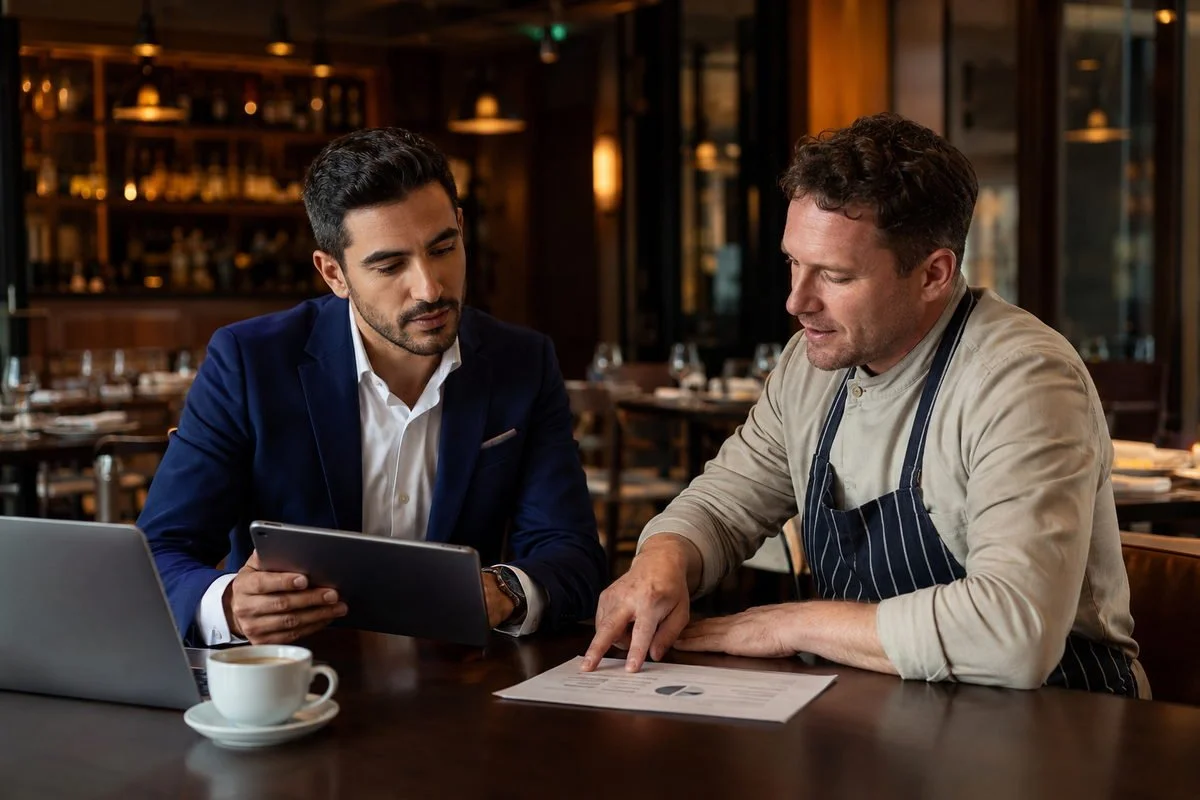
FOH & BOH Ops Efficiency Audit
Positioning, menu architecture, and recipe development with full costing. Every item classified by contribution margin and popularity, priced against what the concept can actually carry. Includes standardized recipe cards.
Custom Projects
Turnarounds, kitchen design, transaction due diligence, pre-opening project management — work that doesn’t map to a defined engagement. Scoped and quoted after a free consult.
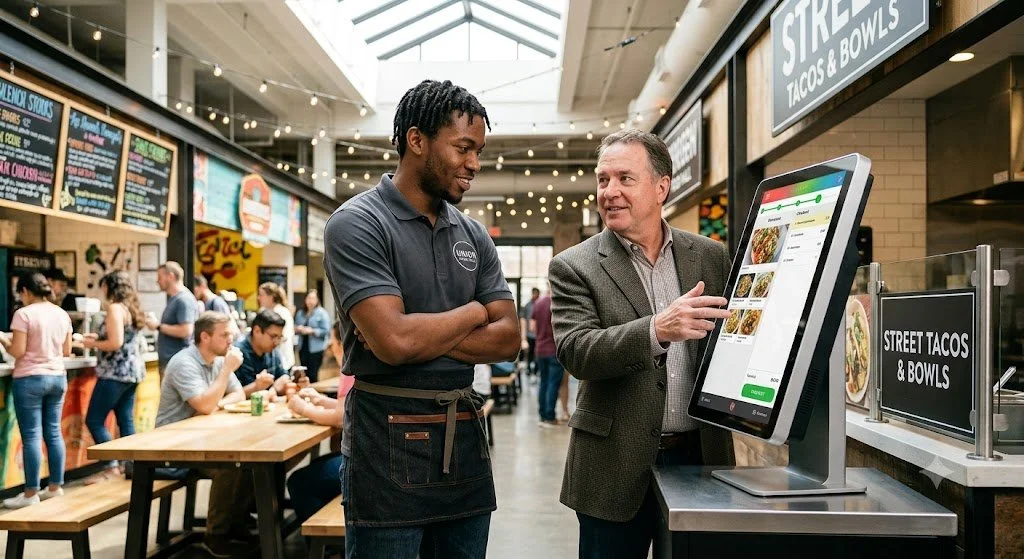
Concept & Culinary Development
A full-cycle walkthrough, open to close, front and back of house. Prep and line workflow, staffing ratios by daypart, ticket times. Every finding priced per week, with a fix list ranked by payback.
Food & Beverage Vendor Audit
Your invoices line by line against real market pricing. We find pack-size discrepancies, missed rebates, and above-market items, then hand you a negotiation brief with defensible targets for each vendor.
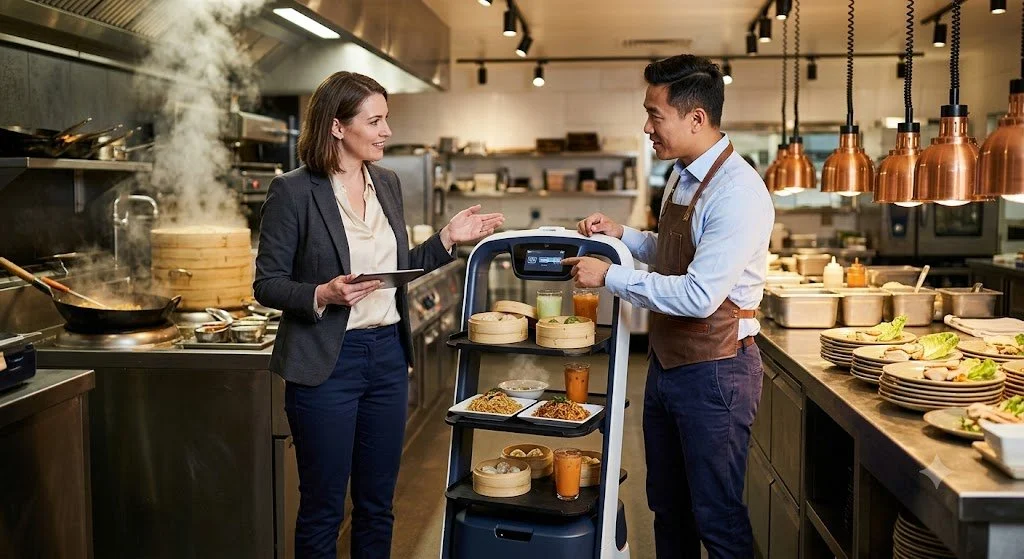
Robotics & AI Software: Automation Analysis
We’ve worked inside this category at Bear Robotics and Newo AI. Vendor comparison scoped to your floor plan, a payback model on your labor rates, and a straight answer — including “not yet.”
Local search and Google Business Profile audit, review response process, listing accuracy, and delivery platform positioning. A content cadence a working operator can actually sustain.
Digital Marketing Transformation
Turnaround/performance improvement for underperforming locations
Marketing and branding strategy (Digital and grassroots)
Kitchen design and equipment planning
Vendor negotiation and supply chain management
Technology consulting (POS, automation software/robotics, KDS)
Buy-side/sell-side due diligence and transaction advisory
Restaurant openings and pre-opening project management
General Consulting Services
Concept development and restaurant business plans/feasibility studies
Menu development and menu engineering (recipe costing, profitability analysis)
Financial and cost control (food cost, labor cost, prime cost, budgeting)
Operations systems and SOPs (front-of-house and back-of-house)
Staff training and management development
Frequently Asked Questions
What does a restaurant consultant actually do?
A restaurant consultant finds where a business is losing money and fixes the causes worth fixing. In practice that means auditing vendor invoices against market pricing, costing every menu item by contribution margin, walking the floor open to close to find workflow and staffing losses, and building the systems that keep the fixes in place. At MarginSurge every engagement starts the same way: we look at your numbers and your floor before we recommend anything.
How much does restaurant consulting cost?
Our consulting engagements are scoped and quoted after a free 20-minute consult, because the work varies with the size of the operation and what is actually broken. There is no standard hourly rate. If you want something concrete without talking to anyone first, our Restaurant Menu Optimization Report is $19.95.
What is a healthy food cost percentage for a restaurant?
The most commonly cited benchmark is 28 to 35 percent of food sales, with prime cost (food plus labor combined) generally targeted under about 60 percent for full service. Treat those as reference points, not targets. A steakhouse and a pizzeria have legitimately different numbers, and a high food cost paired with high volume can outperform a low one. What matters more is whether your percentage is drifting month over month, and which specific items are dragging it.
How do I lower my food cost without raising menu prices?
Four places to look before touching a price. First, vendor invoices: pack size changes, missed rebates, and quiet case-price increases are the most common and the easiest to recover. Second, item-level margin: your top seller often has the worst contribution margin, and small recipe or portioning changes move the number more than a price increase would. Third, prep consistency: a prep list executed three different ways is a yield loss that never shows up on an invoice. Fourth, waste and over-ordering against actual daypart demand. Our Food and Beverage Vendor Audit and menu engineering work target the first two directly.
Can you audit my Sysco or US Foods contract?
Yes. Our Food and Beverage Vendor Audit reviews your invoices line by line against real market pricing, identifies pack-size discrepancies, missed rebates, and above-market items, and hands you a negotiation brief with defensible targets for each vendor. It applies to any broadline distributor: Sysco, US Foods, Performance Foodservice, or Gordon Food Service. Our guide to restaurant food distributors covers how the four compare on minimums and terms.
Do you work with restaurants outside Los Angeles and Phoenix?
Yes. We are based in Los Angeles and Phoenix and work on-site in both markets, and we work remotely with restaurants across the US. Engagements that need a floor walkthrough are scoped around travel during the free consult.
Is a service robot worth it for my restaurant?
Sometimes, and often not yet. The answer depends on your floor plan, your labor rates, and your ticket volume. A robot that pays back in 14 months in one dining room will not pay back at all in another. We have worked inside this category at Bear Robotics and Newo AI, and our analysis includes a payback model on your actual labor rates plus a straight answer, including not yet. Our guide to restaurant service robots compares six models on price and ROI.
Which POS system should a new restaurant buy?
It depends more on contract terms than features. Most modern POS systems do the same core things, and the expensive differences are in processing rates, contract length, and what happens when you want to leave. Our guide to restaurant POS systems compares seven platforms on startup fit, pricing clarity, contract terms, and support, with a named top pick for new restaurants.
Do you help with new restaurant openings?
Yes. Pre-opening project management, concept development, feasibility studies, business plans, and kitchen design and equipment planning are all part of our work, in both Los Angeles and Phoenix. Opening work is scoped as a custom project after a free consult.
What happens on the free 20-minute consult?
It is a conversation about where your restaurant is losing time, money, or both. No pitch. If there is a fit, we scope the work from there. If there is not, we will say so.
Book Your Consultation
Submit the inquiry form to initiate a confidential discussion and explore how these solutions can advance your strategic priorities. Weighing technology decisions? Start with our Complete Guide to Restaurant Technology & Automation in 2026.